
You have not added any products to your wishlist.

Exploring the passage of time through memory realms, sites, and light, “Altered Glow” is a neon glass installation that explores the threads between the past, present, and possible futures. This installation features a trio of handmade neon glass artworks, each offering a unique lens on our collective and personal histories. In the first artwork, “Within,” a vintage mirror serves as the frame for a yellow neon glass infinity mirror, inviting viewers into a reflective journey that touches on foreboding emotions as much as it evokes never-ending sunshine. Its glowing lines create a captivating illusion of boundlessness, mirroring the infinite layers of memory and perception that shape our experiences.
In the second window, a duo of pale blue neon artworks, “Grid,” reimagines a once-familiar visual element in photo backdrops from a bygone era, creating an object that has been remembered but perhaps never existed. It serves as a bridge between past memories and present reflections, highlighting our connection to the visual culture of the past.
Finally, “Window Grate” transforms a common architectural feature into a glowing, ethereal form. This work explores themes of security, movement, and malfunction, using the interplay of light and shadow to suggest new interpretations and possibilities within familiar structures. Together, these pieces invite viewers to reconnect with the energy and stories embedded in forgotten spaces. “Altered Glow” seeks to illuminate the beauty and complexity of our evolving relationship with time, memory, and light.
Alissa Eberle is a visual artist and full time neon glassbender, living and working in Philadelphia. Originally from Lowell, Massachusetts, Eberle studied at the School of the Museum of Fine Arts Tufts University graduating with a BFA in Studio Art. Her artistic practice took a transformative turn while living in New Orleans, earning an opportunity to apprentice at Neometix Neon, where she first explored the craft of bending neon glass. Eberle embraces the challenge of working in this medium as both an artist and a tradesperson, the difficulty of neon is what makes it all the more fulfilling for her.

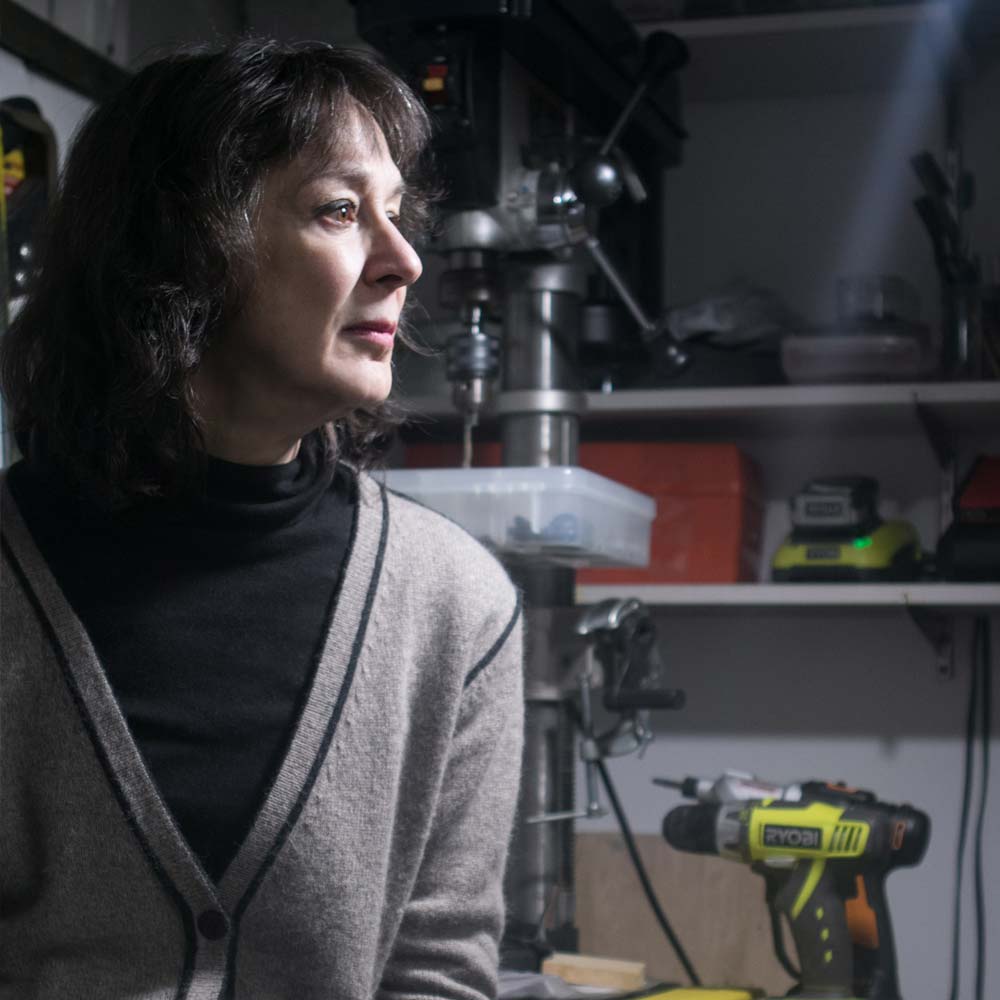
“Eos” is a glowing celebration of curvilinear forms. The title “Eos” is the name of the Greek Goddess of the dawn who drove a two-horse chariot every morning to announce the arrival of her brother, the sun god Helios. It’s a romantic, whimsical installation that draws attention (like a wake up call) to the dire situation we have created for ourselves and all the other living creatures on Earth because of our overuse of plastic. The components in “Eos” are made out of welded industrial plastic debris, rescued from the waste stream. The majority of the pieces in “Eos” already existed, but required modification and additions. The largest pieces are a pair called “Ding Dang,” each of which is nine feet long. “Dang” is predominantly white and “Ding” is mostly orange. The smaller sculptures flank “Ding Dang” in a balanced, asymmetrical arrangement. The sculptures are illuminated solely from within. The orange material used to make these sculptures is from decommissioned highway safety drums from New York highways that have been cleaned, cut up, and welded. Other parts are from decommissioned barrels used for soda syrups and industrial detergents that went through the same process.
Aurora Robson was born in 1972 in Toronto, Canada, grew up in Hawaii, then lived in New York City for 21 years. She holds a double major in art history and visual art from Columbia University. Robson’s practice focuses on plastic debris as a sculpture medium, developing innovative methods like welding and 3D printing. She has received numerous awards, including a Pollock-Krasner Grant and a NEA Art Work Grant. Robson is also the founding artist of Project Vortex, a collective innovating with plastic debris. She currently lives and works in the Hudson Valley with her family.
“Light Spills” are wall-mounted sculptures made of layers of reflective road sign material and paint on Plexiglass. They are designed for daytime viewing when sunlight washes out artificial lighting, as well as at night. By day “Light Spills” are playful and carnivalesque geometric compositions. In the evening, the colored backlighting is turned on and casts colors and shadows, filling their spaces as they beam light onto each reflective surface. Their tenor completely changes with their differently emanating hues. The many layers of color and light that comprise “Light Spills” create surprising depth at the same time as their light and color fill the window and splash onto the street. Their precision and innovation mirror that of Troy itself, and their location uses contemporary technology to transform the heart of the city.
Carol Salmanson works with light and reflective materials to create installations, sculptures, and wall pieces. Her work forms complex layered geometric compositions that radiate color out into their surroundings. Salmanson’s public window installations and sculptures have been seen in Russia, New York, and New Jersey, most recently in Manhattan in 2018. Her latest solo exhibitions were “Light Spills and Sprites” at Guild Gallery II (New York) in 2022, and “Two Sides to a Coin” at SL Gallery (New York) in 2018. In addition to her extensive solo, two-person, and group exhibition history nationally and internationally, she has curated and co-curated shows as well, including “Fire and Water” in fall of 2022. Salmanson earned a B.S. from Carnegie-Mellon University and an M.B.A. from the University of Chicago; she subsequently studied art in New York City at the Arts Students League, School of Visual Arts, and National Academy of Fine Arts’ Abbey Mural Workshop Fellowship program. Awards include a grant from the United States Department of State, and residencies at the Virginia Center for the Creative Arts and the American Academy in Rome. She currently serves on the Board of Trustees for Independent Curators International, Smack Mellon, and the Hearing Health Foundation, and previously served for sixteen years as Board Vice President of NURTUREart Non-Profit, Inc.
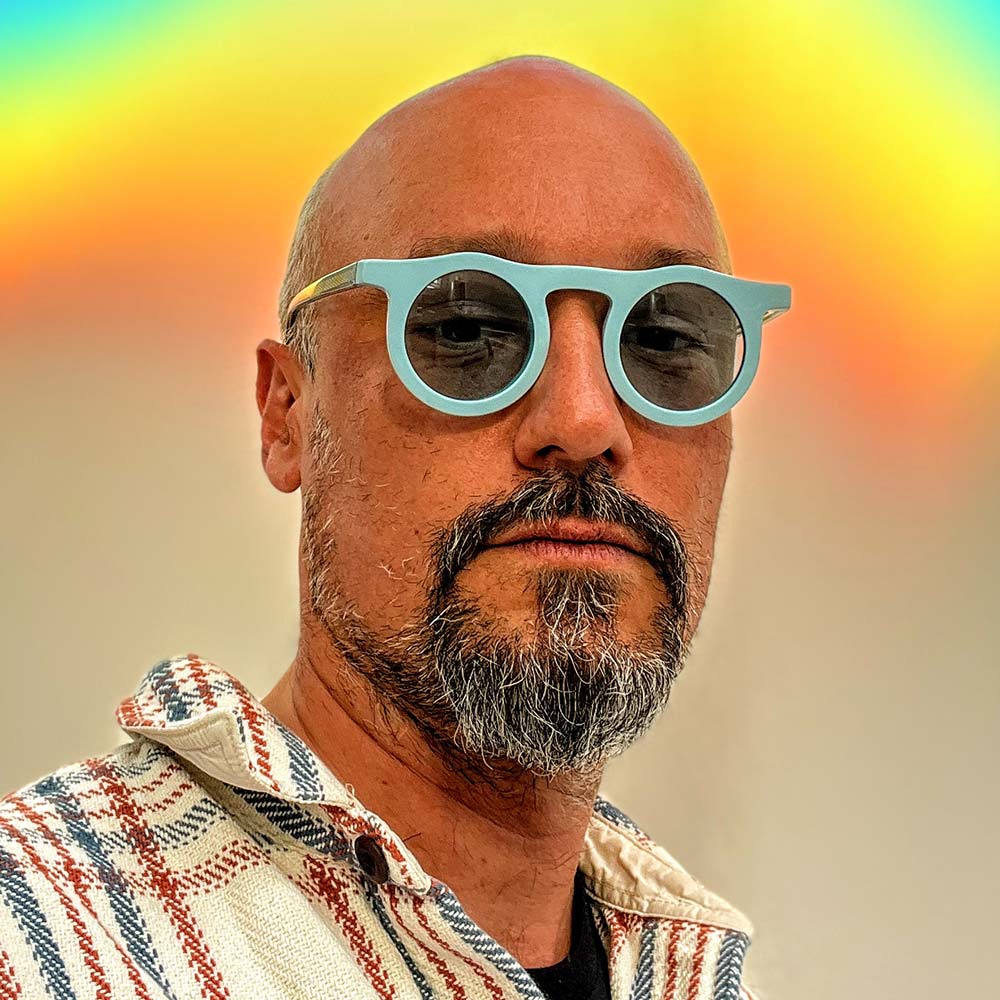
Through complex light installations created from simple five-gallon buckets, Peters creates situations where nothing is as it seems. Notions of reality are exposed as mere assumptions that may or may not bear relationships to how the world works. The artist invites viewers to enter a space where the mind is allowed free rein and to escape reality through beautiful, dancing light.
Jason Peters (b.1977, USA) lives and works in Brooklyn, NY. He holds a BFA from the Maryland Institute, College of Art, Baltimore. He utilizes mass-produced found objects within his practice to construct large-scale installations that reflect upon or reference their surroundings. He attempts to evoke emotional and intellectual reactions to these objects, often utilizing light to manipulate perception. Peters has exhibited locally and internationally, including at the Pulitzer Arts Foundation, Oklahoma City Museum of Art, Katonah Museum, Center for Contemporary Arts Santa Fe, Mattress Factory (Pittsburgh), Project Space (Washington D.C.), Waterways (Venice, Italy), Supreme Trading (Brooklyn), Visionary Art Museum (Baltimore), and others. His work is represented in public and private collections worldwide.

“Troy 1877” is a dynamic electroluminescent (EL) lace installation based on a map of Troy published in 1877. Different sections of the installation’s EL wires disappear and reappear in alternating patterns. In doing so, they redivide the area they occupy. The work uses traditional bobbin lacemaking methods to create the interlaced grid. Lace is any textile made of a collection of holes bordered by threads. In its essence, it is a redivision of the space it occupies. The 1877 map of Troy offers a past spatial division, on which the 2024 spatial division is based. This installation takes a memory of a space and remakes it into a different kind of space divider, offering new reconfigurations of it in the form of unstable EL lace.
Layla Klinger (all pronouns) is an interdisciplinary artist and educator working across sculpture, lacemaking, audiovisual installation, and queer performance. They exhibited work at The Jewish Museum (New York City), Mana Contemporary (Jersey City, NJ), and at The Houston Center for Contemporary Craft. They created site-specific installations for the Little Islands Festival (Sikinos, Greece), FRATZ Festival (Berlin), and Jefferson Market NYPL (New York City). Klinger was an artist-in-residence at the NARS Foundation (Brooklyn) and Prairie Ronde (Vicksburg, MI), and a 2023 NYSCA/NYFA Artist Fellowship finalist in Sculpture/Craft. They live in Brooklyn, NY, and teach at Parsons School of Design.

As a vibrant and evolving city, Troy’s unique industrious heritage and ambitious technology-focused future poses a unique contextual condition. At the site scale, the intersection of Franklin Alley and Broadway showcases the transition from a historic corridor to a new emerging passage. As a spatial element a ‘corner’ symbolizes a transition in architecture. It invites movement and daylight cuts around it. “Evolving Luminescence” acts as an extension of the facade at this corner, reaching into the alley, and enchanting onlookers with its dynamic interplay of cycling colored lights on cantilevered scrims. In this way the installation takes advantage of this corner transition and illuminates a look toward the future. This captivating installation blends old and new aesthetics through intricate transitions and layers of light, creating a mesmerizing visual experience. The materials of the scrims pay homage to Troy’s industrial roots in the textile and steel industries. By day, the colorful panels act like a sign of what is to come, and by night the piece transforms through LED illumination, oscillating between a spectrum of colors. Color selections will be sampled from murals found around the city, to knit the installation into the canon of public art that already enlivens the city. As viewers approach and move around the building, they encounter various visual experiences—from the solitary, nostalgic corner to the vibrant, multi-colored expanse. Each angle offers a new perspective, highlighting the continuous interplay between history and modernity. The radiant dance of RGB lighting merges the old with the new, in a harmonious blend, celebrating the continuity and evolution of an ever-changing narrative that honors the past, embraces the present, and looks toward the future.
Level Studio Architecture provides distinctive design solutions that aren’t afraid to explore unconventional materials and assemblies. At our core, we believe that addressing environmental, social, and functional concerns are equally important to aesthetic beauty. In practice this means we take a rigorous approach to contextualizing a client’s design problem through extensive research and examination. Collectively we aim to elevate the built environment through this layered approach. Level Studio Architecture is a team of architectural designers with complementary backgrounds and skills. Based in New York City and New England, the studio was formed by three former classmates who met while pursuing design-build competitions. After a decade of working together, the studio is built on a strong foundation of trust. We see great potential to deliver purpose-driven designs while maintaining efficiency by embedding our knowledge in fabrication and construction early in the design process. Our experience ranges from conceptual design through construction administration, and includes various typologies such as gallery/exhibition, residential, and public facing projects.
Vespr Designs is an agile and collaborative lighting design firm, steadfast in the belief that the best outcomes are sculpted through shared creativity and expertise. We are not just lighting designers but also experienced lighting manufacturers, standing at the intersection of form and function, aesthetics and practicality. Our unique blend of backgrounds in both lighting design and manufacturing empowers us to champion our clients’ best interests with unmatched rigor. From conceptualizing intricate designs to selecting the perfect product for a specific application, our unique perspective ensures the optimal design and final experience. Based in New York City, San Antonio, TX, and Los Angeles, Vespr Designs provides lighting design consultancy across diverse market sectors, including commercial, residential, hospitality, cultural, educational, and infrastructural establishments.
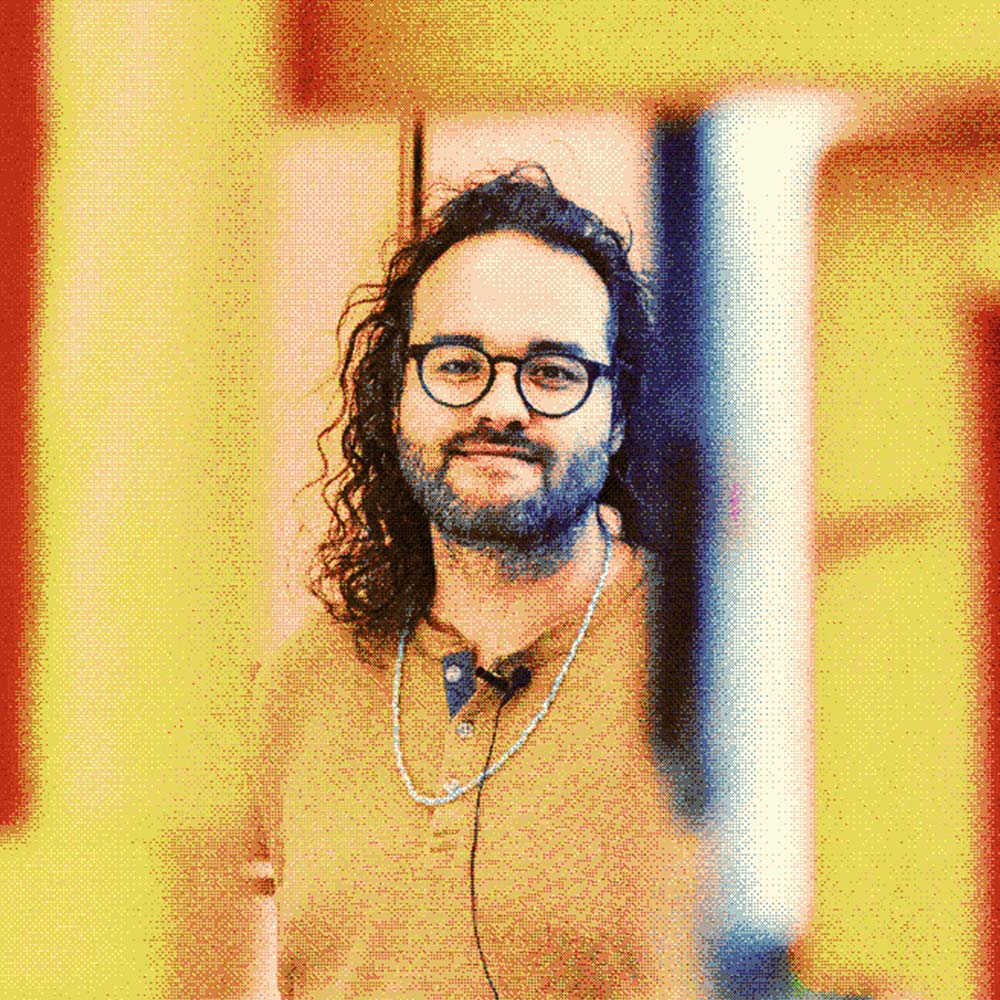
“Light Work, Troy” encourages visitors to see themselves reflected in the history and culture of Troy and to become active collaborators in the dynamically changing look of the work and this city. Composed of lightweight yet resilient mirrored Mylar film, structured with transparent fishing wire lightly attached to the window display’s structure with removable tape, the work presets as a floating sculptural object with a dynamically changing surface that shifts throughout the da. This allows for enjoyment and engagement in both day and night. With distinct, city-derived patterns cut into the Mylar, visitors see themselves literally reflected in the work and have the work reflected onto and around them through the Mylar’s mirror properties. During the day this work will be activated by the sun, whose rays will spread the Mylar’s patterns beyond the shop window and out into the sidewalk and beyond. During the night the work will be powered by these very same rays, utilizing a solar panel, solar battery, and timer to run a digital projector. Utilizing its own power source, this piece begins to carve a way forward in creating self-sustainable yet technologically-advanced light art installation. Encouraging and experimenting in deeper visitor interaction without physical touch, visitor’s reflections will merge and “interact” with the figures and spaces in these projections, becoming a part of the work.
Diacon-Furtado (all pronouns) is a Brazilian and American collaborative artist and designer. Trained as a cultural anthropologist, public interest designer, and architect, their public, iterative and interactive projects collaboratively imbue basic forms, patterns and rhythms with shared meaning: crafting spaces and projects that act as community architectures and living archives. They have been the subject of two solo museum shows, at Aomori Contemporary Art Centre and Indiana University’s Wiley House Museum, with additional exhibitions at the Venice Biennale of Architecture, Delft Architectural Biennial, and Buenos Aires Biennale of Architecture. In addition, their design work has been named one of the “World’s Greatest Places” by TIME Magazine.
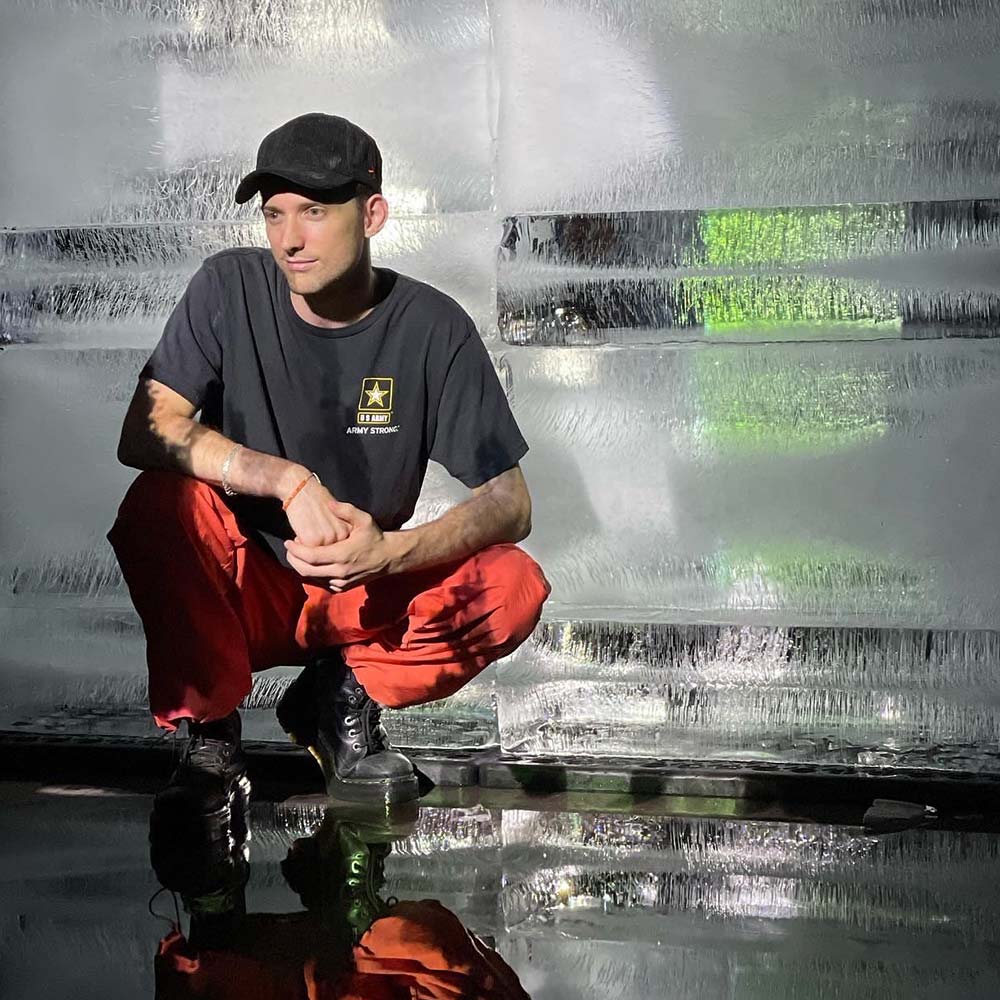
I’m interested in exploring a narrative about the interplay between humanity and nature, symbolizing the impermanence of time and the pressing urgency of climate change. “Entanglement” reflects the complex and intertwined relationship between human actions and the natural world. The combination of melting ice and animated light serves as a visual metaphor for how connected we are with nature, and how our actions have far-reaching impacts on the environment. I also am interested in exploring the historical context with the ice trade in Upstate New York, and how an industry boomed around supplying ice to the developing country.
At the heart of this installation is an 8×4 foot ice sculpture composed of meticulously stacked blocks of ice acting as a projection canvas and temporal sculpture. Each block will come from rejected ice blocks full of imperfections such as frozen air bubbles and crystal formations. At night, two projectors will illuminate the ice with motion mimicking bioluminescent plankton and organic patterns found in nature such as network systems or the growth of fungal networks. As the ice blocks melt the light will refract through the frozen bubbles and ice stalagmites, illuminating the natural freezing process and moments frozen in time. Throughout the festival guests are invited to touch the ice and watch it change form, a poignant reminder of the passing of time and the transitory nature of existence. This melting process mirrors the ongoing effects of climate change, urging viewers to reflect on their role in this vast, interconnected system. Hopefully this installation invites viewers to contemplate their impact on the planet and consider the legacy they wish to leave behind. As the piece slowly melts away, it implores us to act before the beauty and balance of our world do the same. A symphony of sound, light and ice, a visual poem to the beauty of nature, and a stark reminder of its vulnerability in the face of human influence.
Nate Mohler (b. 1997, Los Angeles, CA) is an emerging media artist and designer, who integrates physical installations with technology to build conceptual and avant-garde experiences. A 2019 UCLA graduate with a B.A. in Design, Media Arts, Mohler is intrigued with the fusion of conceptual art and technology to support connectivity and social activism with unconventional space and sound. His work focuses on eliciting action and question through digital mediums such as projection mapping, fabric installations, light sculpture, and video art.

My interdisciplinary work delves into the possibilities of the metaverse, and explores the tension between material and digital worlds. My Latinx heritage, rooted in Umbanda traditions, informs my approach through tribal patterns, ritualistic processes, and themes of spirituality. I also draw inspiration from indigenous and egyptian cultures, besides the Neoconcrete movement, that transcended the canvas to include the audience in the work and create immersive, 3D geometric spaces. These influences converge in my concept of “techno-ancestry”: a call to inhabit the present with awareness of our roots while envisioning a future where technology strengthens, rather than severs, our connection to the past. My artworks often depict portals that invite the viewer into a technological sphere pulsating with echoes of ancestral knowledge.
“Blue Lotus”, is constructed with white strings, fishing wire, steel wire, gesso, styrofoam and acrylic medium. After challenging times like the pandemic, being physically present with other people and taking over spaces within small towns is an invitation for connection. Site-specific installations have dialogs with the space and its people, and this work will be seen against the sky and the water, to symbolize strength, resilience, enlightenment and rebirth, characteristics of the lotus flower. It emerges from swampy waters without mud, muck, or debris. Its blooming pattern of opening with the rising of the sun and closing as night falls represents transformation amidst difficult terrains (the installation will too change with the light). In Hinduism and Buddhism, the lotus flower is the womb of the universe, where all things are born from. It is the link between the universe’s soul and our own.
Sabrina Barrios is an interdisciplinary artist whose work delves into the possibilities of the metaverse, and explores the tension amongst material, digital, and spiritual worlds. Recent exhibitions include site-specific installations “Reversa” (Farol Santander Museum, Brazil); “HoloDeity” (Illumination, New York); “Portal Station” (MACS, Brazil); and “Where the Sky Meets the Earth” (Baku Biennale, Azerbaijan). Paintings were shown in The Fourth Bronx Museum Biennial (New York) and at Anita Schwartz Gallery (Brazil). Videos screened at the MoMA: Abstract Currents (New York). Residencies include The Kingsland Wildflowers (New York), Casa Voa (Brazil); The Studios MASS MoCA (North Adams, MA); Arteles (Finland); Bains Connective (Belgium); and The Wassaic Project (Wassaic, NY).
For Troy Glow 2022 Frelin created “Empty Signs,” composed of eight large signs of various shapes and colors. The piece was kept as a permanent installation and now appears in Troy Glow 2024. The signs contain no text but are “empty” colors and shapes. Half of the signs face north/south and half face east/west, so the artwork is visible from surrounding blocks and the Hudson River, as well as marking the gateway from the riverfront to River Street. Each sign is lit with a gentle, colored light that dances in a choreographed sequence. While most signage individuals encounter in the urban environment are either trying to sell something or give directions, “Empty Signs” does the opposite: it invites viewers to simply enjoy the moment and to be fully present.
Adam Frelin (b.1973, Grove City, PA) has shown widely at venues such as the Los Angeles County Museum of Art, Getty Research Institute, Aldrich Contemporary Art Museum, and Contemporary Art Museum St. Louis. He has received awards from the National Endowment for the Arts, New York Foundation for the Arts, New York State Council on the Arts, and College Art Association. Frelin has completed residencies at the Skowhegan School of Painting and Sculpture, MacDowell Colony, Atlantic Center for the Arts, Ucross Foundation, Fine Arts Work Center, and Yaddo, among others. He has published two books of photography and has had several public artworks commissioned throughout the world. Most notably, he and his team were awarded a $1 million Public Art Challenge grant through Bloomberg Philanthropies for which Frelin was Lead Artist on Breathing Lights, a multi-city temporary art installation that involves illuminating abandoned buildings with a breathing effect created with light. Frelin received a BFA from Indiana University of Pennsylvania, and an MFA University of California, San Diego. Currently he is an Associate Professor of art at the SUNY University at Albany, and lives in Troy, NY.

Let’s kick off Troy Glow 2024! Come toast the region’s largest light festival at the opening reception. Cash bar + refreshments.
Free tours of Glow installations every hour on the hour from 6-8pm. Meet outside the Tavern.
Family-friendly block party with food and beverage vendors, live entertainment and arts activities culminating in a walk through Glow installations at 7pm.
Free tours of Glow installations every hour on the hour from 5-7pm. Meet at corner of Broadway + Franklin St.
Local businesses will be activated with live music and art! Presented by the Downtown Troy BID.
Free tours of Glow installations every hour on the hour from 5-8pm. Meet at 30 Second St.

Troy Glow 2024 was a light art festival that took place November 1st – 10th, 2024 in Troy, New York. 10 light art installations were on view in 5 downtown blocks. Projects could be viewed anytime during these dates.
Yes! Troy Glow 2024 installations and events were free and open to the public.
Come to downtown Troy during the festival. Projects will be lit nightly from 4:00 to 11:00 p.m. November 1st – 10th. Projects can be viewed anytime during these hours. Sunset is around 4:45 p.m. this time of year and twilight lasts approximately 90 minutes. Festival events will include guided tours.
Yes! Troy Glow is great for kids of all ages who will be instantly attracted to the dazzling light art. All Troy Glow events will be family-friendly.
Downtown Troy is home to many small businesses and is known for its artisan shops and vibrant restaurant and bar scene. Visit the Downtown Troy BID for information on Troy businesses.
Troy’s parking meters are active until 5 p.m. on weekdays (M-F). After 5pm and on weekends you can park for free downtown and in all municipal parking lots and garages.
Troy Glow 2024 was organized by the Arts Center of the Capital Region’s Public Art Program whose offices are in downtown Troy. Judie Gilmore was the festival’s director.
Troy Glow 2024 curators are Judie Gilmore and Adam Frelin.
2 3rd St, Troy, NY
Enjoy a 15% off in-store purchases during Glow. Also, stop by to see a wndow light installation in development for opera performance at EMPAC.
275 River St, Troy, NY
Come by for liquid light painting + glow sticks. Also glow-in-the-dark and UV light cocktails! (Nov. 9th only)
400 River St, Troy, NY
We’ll be offering snacks + glow-in-the-dark temporary tattoos.

Adapted from a page design by Mannix Marketing, Inc.
Having trouble using this site? Accessibility is our goal. Please contact us at troyglow@artscenteronline.org with site improvements.