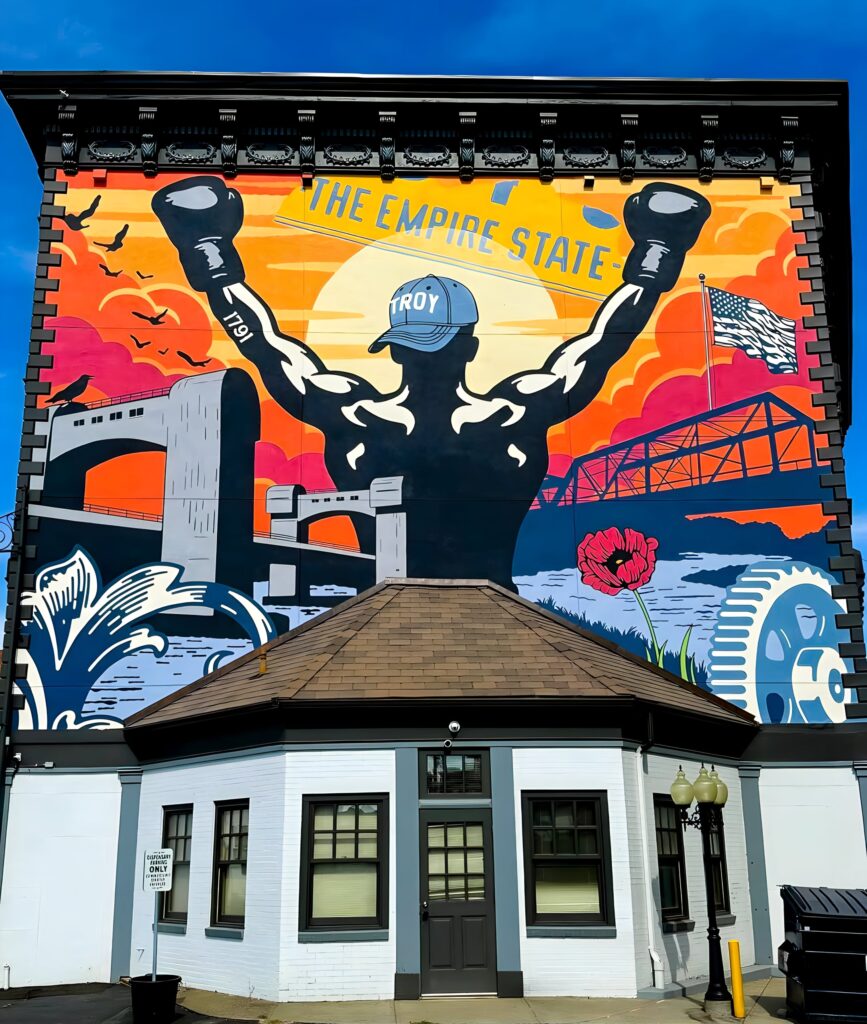
The Arts Center of the Capital Region presents Skyward, a three-story landmark welcoming thousands each day as they cross the Green Island Bridge into downtown Troy.
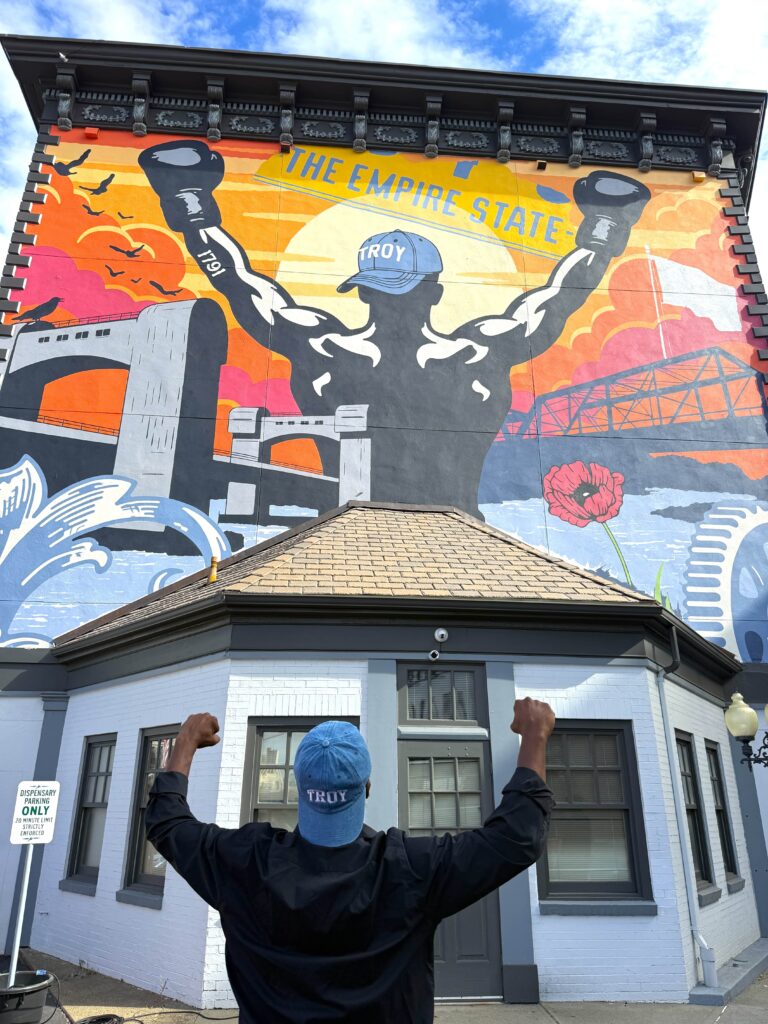
Created by acclaimed Wisconsin artist Greg Gossel and curated by Belinda Colón, this striking work captures Troy’s resilient spirit through the image of a triumphant boxer—arms raised skyward—surrounded by symbols of the city’s heritage, engineering innovation, and patriotic pride.
At the heart of Skyward stands a boxer whose outstretched gloves mirror the building’s roofline and the converging roads below—an emblem of strength, persistence, and hope.
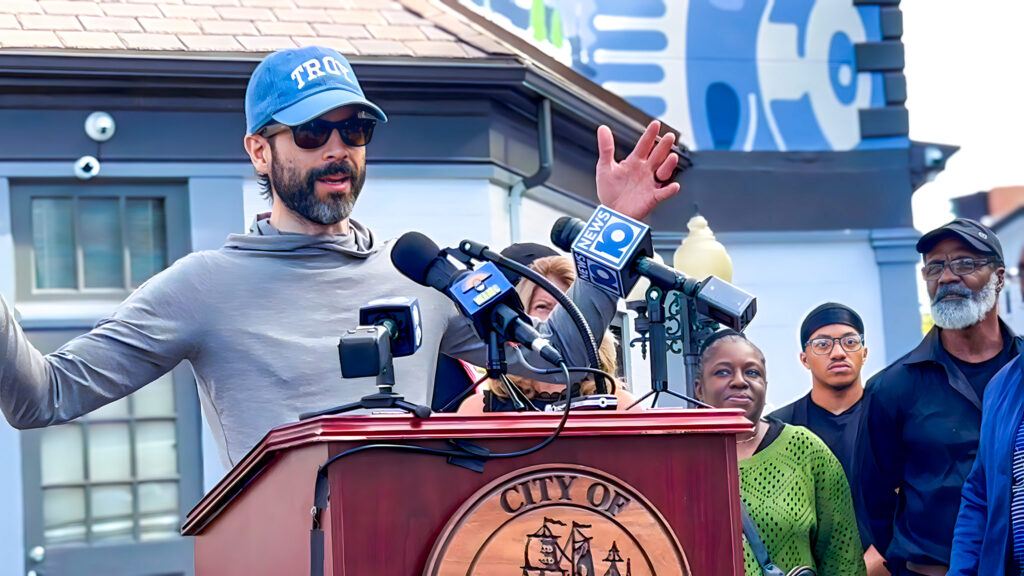
“To me, the boxer really hits home. We’re proud to be Trojans. If you know anyone from Troy, you know—we’re fighters.” —Troy Mayor Carmella R. Mantello at the mural’s unveiling.
The figure embodies the city’s grit: Troy has endured and rebuilt after four devastating fires, its people emerging stronger each time. The Collar City has also weathered the demands of two world wars, the social and cultural upheavals of the 1960s, the long decline of its once-mighty manufacturing base, and the pull of suburban expansion that drained life from its neighborhoods and commercial corridors. Most recently, Troy withstood the shutdowns and isolation of the pandemic—yet its spirit never broke. That same resilience runs through Troy’s storied boxing tradition—a legacy of discipline, community, and comeback power stretching back more than 150 years.
A LEGACY OF BOXING
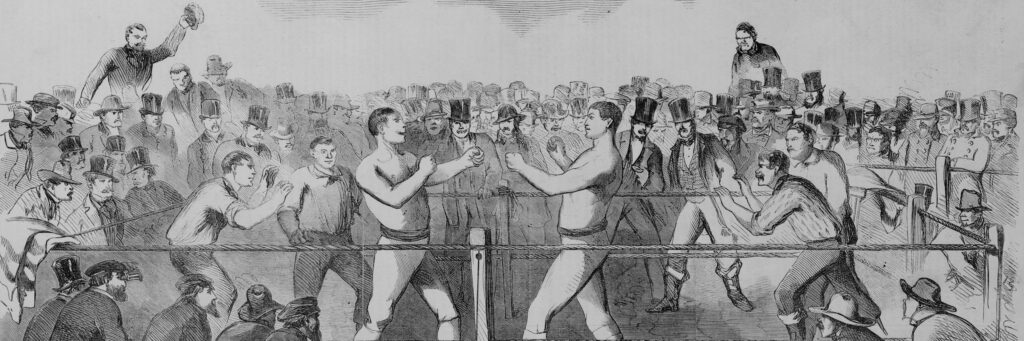
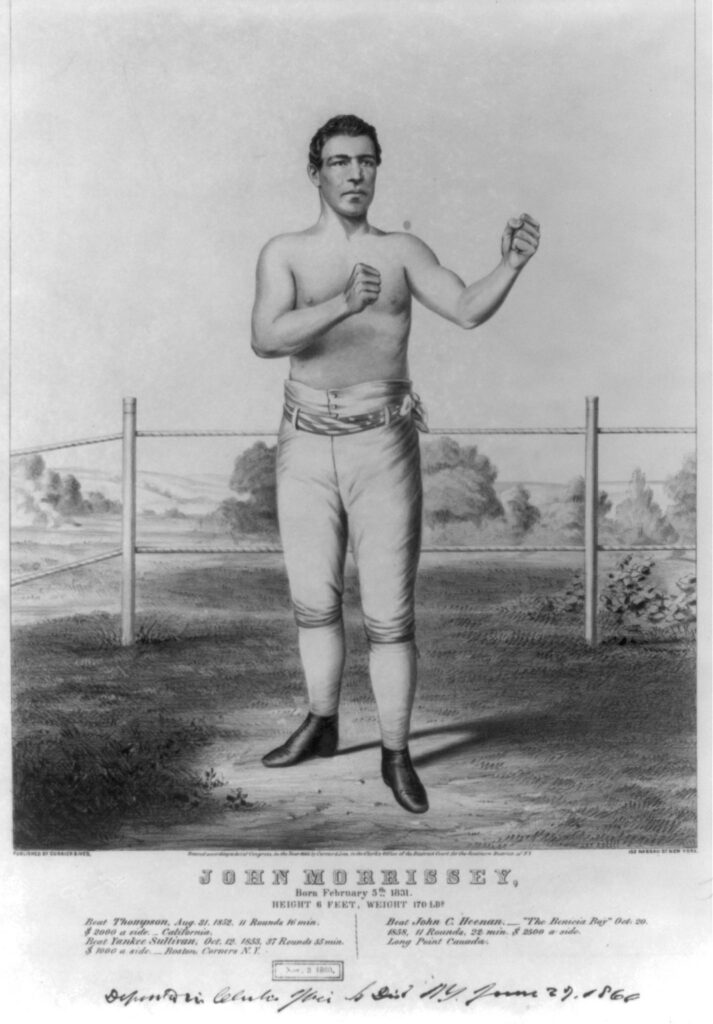
The great prize-fight between Morrissey and the Benicia Boy at Long Point, Canada West—the commencement of the fight / from a sketch taken on the spot by our own artist. Illus. in: Frank Leslie's illustrated newspaper, 1858 Oct. 30, p. 343. (Library of Congress).
EARLY ROOTS
(19th Century)
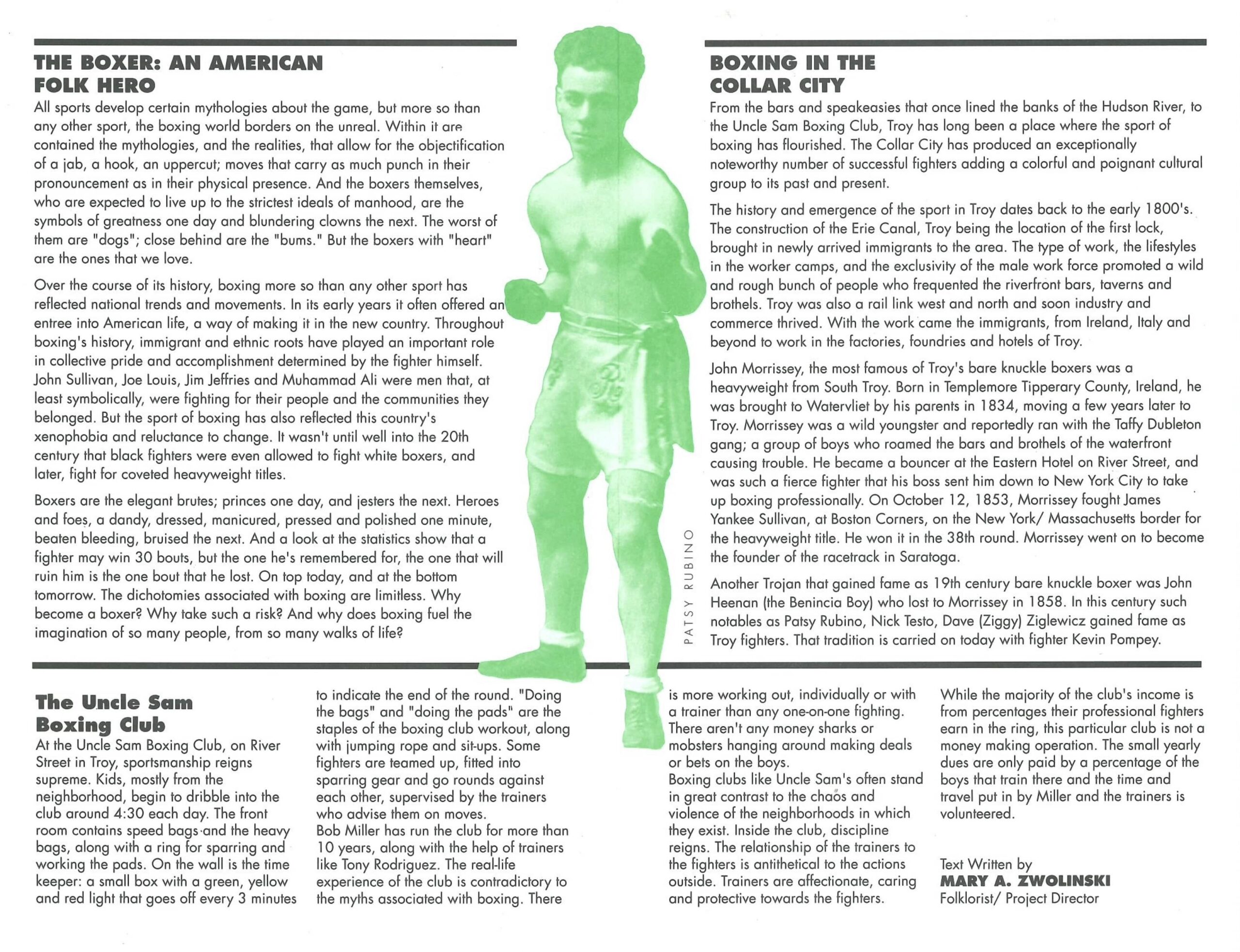
Boxing culture in Troy emerged alongside the construction of the Erie Canal, when immigrants, ironworkers, and “canawlers” (people who lived and worked along the canal) shaped a tough working-class city.
Fights were common in those early days, when canalmen often settled disputes over whose barge would pass first with their fists—turning the locks themselves into impromptu prize rings. This roughneck culture of endurance, pride, and showmanship produced many of the region’s first bare-knuckle brawlers, including legends who barnstormed the Erie Canal corridor. Among them, John L. “Boston Strong Boy” Sullivan famously fought up and down the canal route, where crowds of canallers wagered their week’s pay on bouts beside the towpaths.
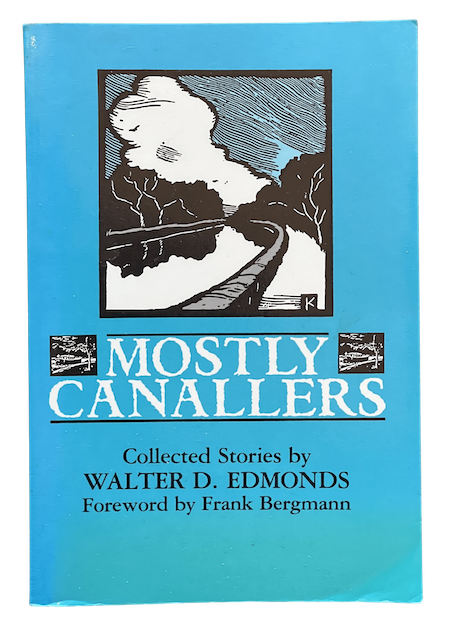
Upstate New York author Walter D. Edmonds, chronicler of the canal era, vividly captured that world of working-class grit and lock-side rivalries in stories such as “At Schoharie Crossing” from Mostly Canallers—where canalmen literally fought for the right-of-way. Troy also produced early champions such as John “Old Smoke” Morrissey (bare-knuckle champion, U.S. Congressman, and Saratoga Race Course founder), John “Benicia Boy” Heenan, Martin Tynan, Patsy Rubino, Nick Testo, and Zeke Wilson.
The sport flourished at the Uncle Sam Boxing Club on River Street—just a few blocks north of where Skyward now rises. Founded in 1973 by Bob Miller (New York State Boxing Hall of Fame inductee), the club trained stars like Kevin “Troy Tiger” Pompey (NYS HOF 2023) and Verno Phillips (three-time world junior middleweight champion), and even hosted early bouts by Mike Tyson at RPI Fieldhouse.
Veteran trainer Sam Bunch continues the tradition at Next Bunch Boxing in the Griswold Heights Community Center, mentoring national standouts such as 17-year-old national titleholder Devonce Harvey and Jadah Robinson, a four-time Junior Olympic gold medalist who turned professional in 2024 after competing in the Olympic Trials.
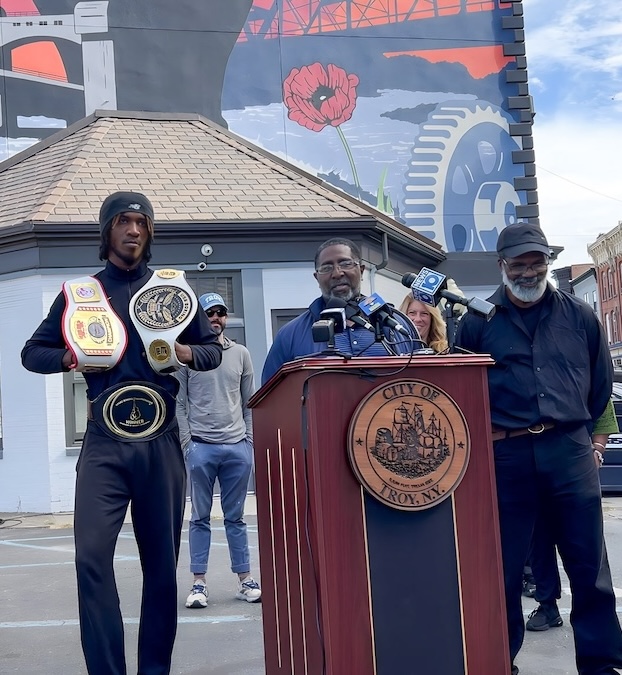
At a press conference introducing the mural, veteran trainer Samuel “Sam” Bunch—a cornerstone of Troy’s boxing scene for more than 30 years—spoke to the city’s proud fighting spirit.
“Troy is a boxing town. Boxing was always big in Troy,” Bunch said. “It’s an outlet for kids, building discipline and accountability.”
Bunch continues to mentor a new generation of Troy fighters at the Griswold Heights Community Center, carrying forward a local tradition that values hard work, mentorship, and perseverance.
The Skyward mural honors that living legacy—connecting Troy’s historic grit with its vibrant, rising future.
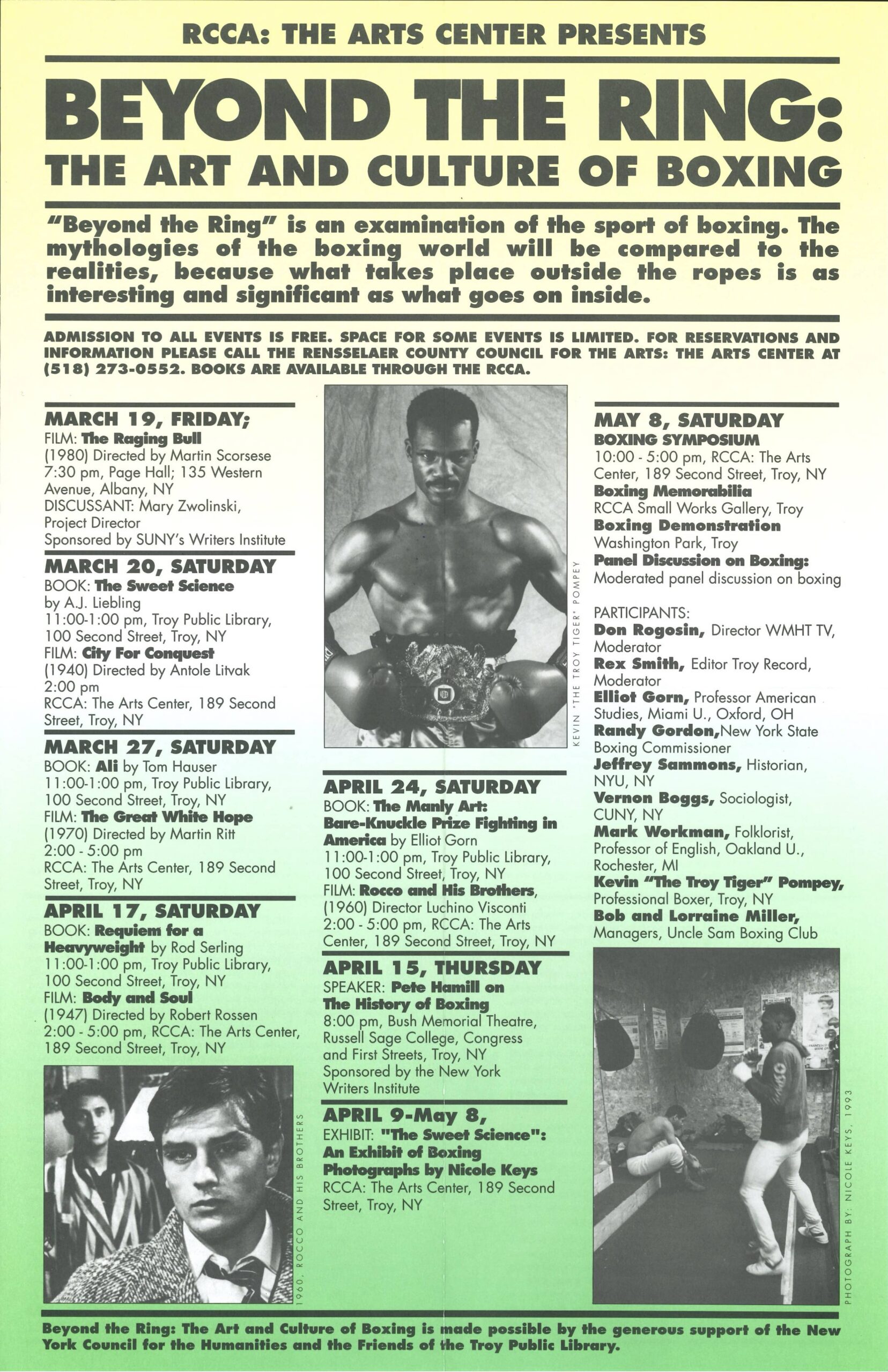
Caption: The Arts Center has long championed Troy’s boxing heritage—from our 1993 program Beyond the Ring: The Art and Culture of Boxing (an exhibition, film series, and symposium featuring Pompey, Miller, and other boxing luminaries) to today’s monumental celebration through Skyward.
Troy’s newest mural pays homage to its boxing history
WAMC Northeast Public Radio | By Samantha Simmons
Published September 21, 2025 at 10:15 AM EDT
THE ARTIST & HIS WORK
Created by Wisconsin-based artist Greg Gossel, the 32-foot-high × 43-foot-wide mural centers on a “resilient figure” whose gloved arms rise toward the building’s peak, aligning with the parting roads below.
Radiating elements reflect Troy’s heritage—its industrial ingenuity, architecture, and iconic bridges spanning the Hudson. A water wheel recalls the city’s manufacturing roots, while an American flag and poppy honor regional veterans. References to Troy’s boxing legacy and its famous crow roost add layers of local character, all drawing the eye toward a dynamic central point of energy and motion.
“This piece is about resilience,” Gossel said. “Everything comes together at a single point, much like how Troy has risen time and again. The bridges, the wildlife, the industrial symbols—they all connect to the energy of this place.
The Green Island Bridge, with its Art Deco lines and steel geometry, served as both visual and symbolic inspiration. Its patterns and glow at sunset mirror the strength and beauty that define Troy—an image echoed in the mural’s composition and color.
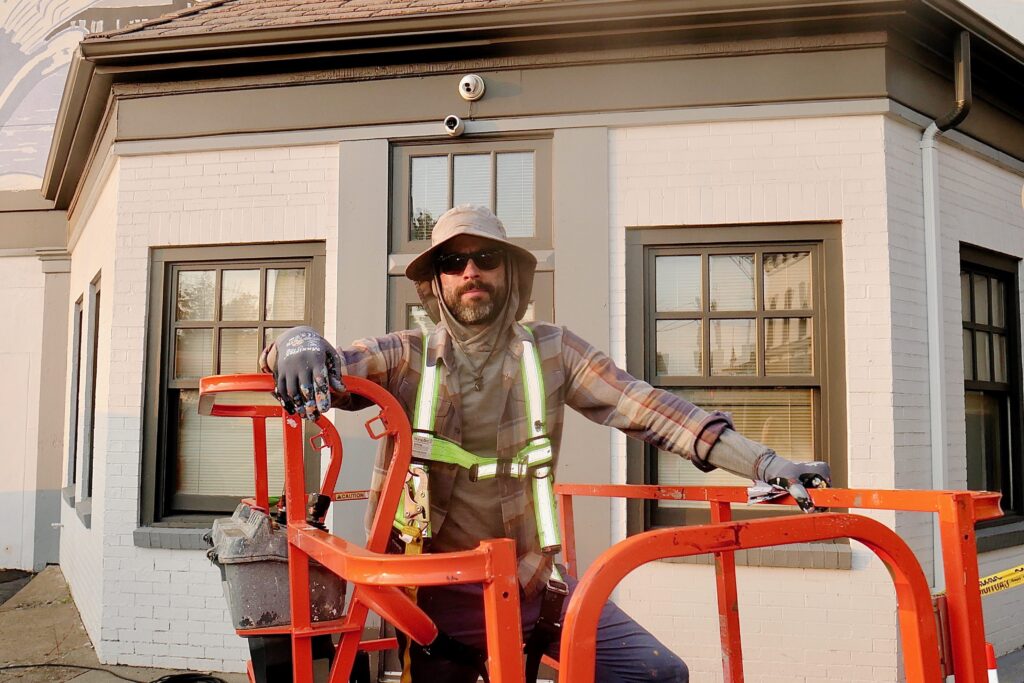
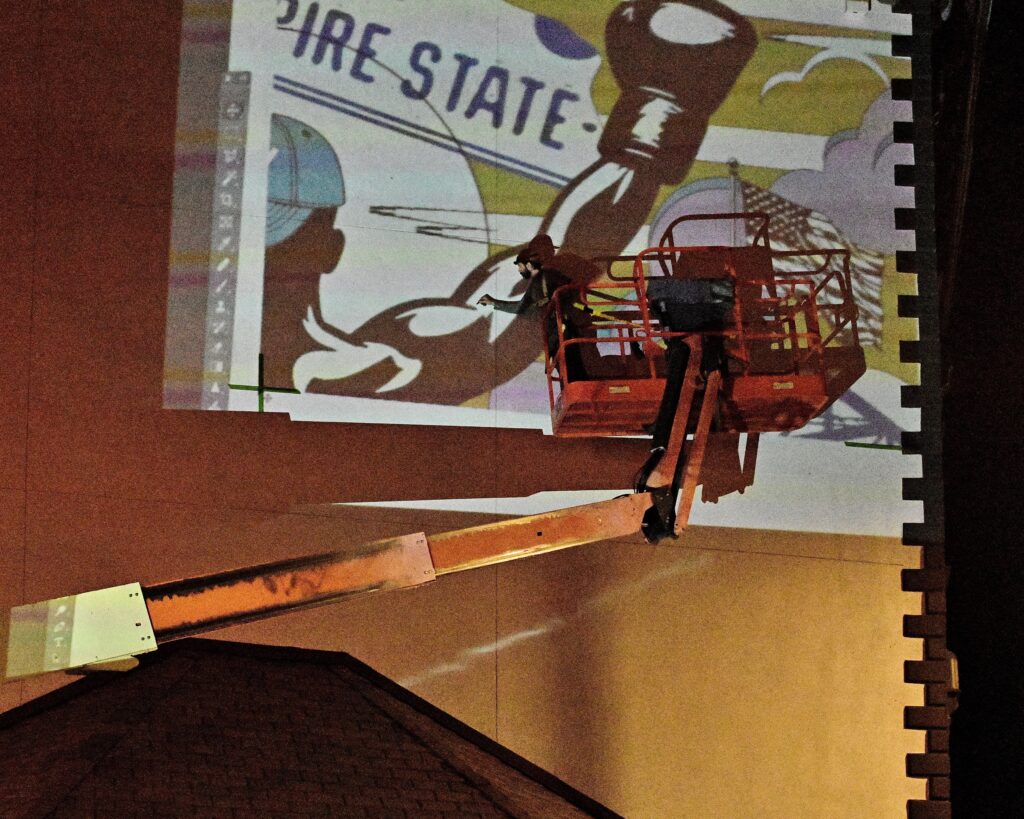
After years painting large-scale works across the Midwest—including a 120-foot-wide × 80-foot-high mural in Milwaukee—Gossel brought his bold palette and layered technique to Troy. He completed Skyward in just four days, projecting the design at night and building color and detail by day.
Gossel described his first visit to the city as eye-opening: from the lift above the Hudson, he was struck by how the evening light transformed the landscape—a view that now lives on in the mural and, fittingly, in the sunsets behind the Green Island Bridge.
The Green Island Bridge, with its Art Deco lines and steel geometry, served as both visual and symbolic inspiration for the mural—its patterns and sunset glow mirror the strength and beauty that define Troy.
Facebook
Twitter
LinkedIn
Skype
WhatsApp
Email
FUNDING & SUPPORT
Interested in donating?
To donate to and support public art projects like this one, please click the button below.